Expanding Digital Asset Horizons
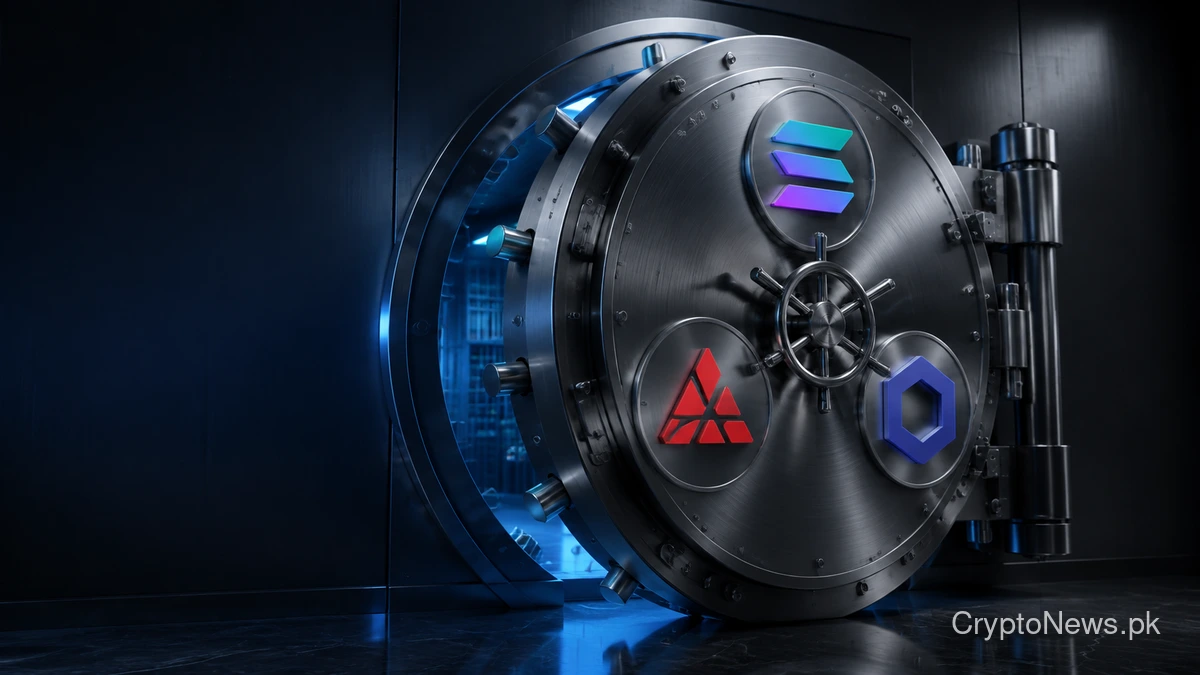
Financial services giant Charles Schwab has announced plans to diversify its crypto trading platform by adding support for Solana, Avalanche, and Chainlink. This expansion comes only months after the firm officially launched direct cryptocurrency trading for retail clients, which initially focused exclusively on Bitcoin and Ethereum. According to Cointelegraph, the move signals a strategic shift to capture a broader segment of the digital asset market.
Platform Context and Fee Structure
The Schwab Crypto platform, which began its rollout in May, currently allows users to execute trades directly within their brokerage accounts. According to The Block, the firm maintains a fee structure of 75 basis points per transaction for these digital asset services. By integrating these additional tokens, Schwab is positioning its platform to compete more aggressively with established crypto-native exchanges that offer a wider variety of altcoins.
Market Implications of Institutional Adoption
The inclusion of Solana, Avalanche, and Chainlink by a major legacy financial institution like Schwab reflects a growing institutional appetite for assets beyond the two largest cryptocurrencies. Analysts suggest that providing regulated access to these specific tokens could increase liquidity and mainstream legitimacy. While the firm has not provided a specific date for the full rollout, the expansion is expected to be phased in over the coming months to ensure platform stability.
The Pakistan Angle
For Pakistani crypto enthusiasts, this development highlights the ongoing global trend of traditional financial institutions embracing a wider range of blockchain assets. However, the impact on local holders remains indirect. Since Schwab Crypto is a service restricted to U.S.-based clients, Pakistani residents cannot access these trading features directly through the platform. Furthermore, local users should remain mindful of the regulatory environment in Pakistan, where the status of digital assets continues to evolve. Pakistani investors utilizing international exchanges should ensure they are compliant with local tax reporting requirements, such as those overseen by the Federal Board of Revenue, and remain aware that international platforms may not be registered with the Securities and Exchange Commission of Pakistan.
Future Outlook for Retail Investors
As major financial players continue to add support for decentralized protocols, the barrier to entry for retail investors is likely to decrease. The integration of these assets into traditional brokerage accounts simplifies the user experience by removing the need for self-custody wallets or complex exchange interfaces. Investors should continue to monitor how these large firms manage security and compliance as they expand their crypto-asset offerings.